The story of Sage Chapel Cemetery will be presented at the National Slave Dwelling Project Conference this Thursday, October 25th, 2018 by historian and author Dorris Keeven-Franke. For more information about the Conference see The Slave Dwelling Project at http://slavedwellingproject.org/ on the web.
As Joseph McGill states, its the people who lived in these dwellings, and who are buried at Sage Chapel Cemetery that need to be acknowledged and know that the world knows “I’se was here”. Sage Chapel Cemetery has at least 117 burials, of which ONLY 37 are acknowledged with a headstone, and we know that many were born enslaved. As long as someone remembers, these people are not to be forgotten.
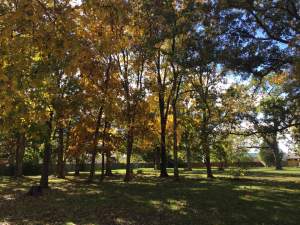
Sage Chapel Cemetery is an African-American cemetery located on Veterans Memorial Parkway, just east of Highway K in O’Fallon, Missouri. (Just west of the VFW Post 5077) This is the only African-American cemetery still in existence in the City of O’Fallon; it most likely began as a burial ground for the former enslaved members of the Samuel Keithly household. It contains at least 117 burials that have been documented by headstones, obituaries, death certificates and/or living family members. Of these at least 17 were born into slavery. It became a formal one-acre plot when deeded to the African-Methodist Episcopal (A.M.E.) Church in 1881. The earliest visible gravestone is Priscilla Ball in 1900. African-American families have used this cemetery for well over 100 years. The church that is known to be associated with it, which was located further on Sonderen, as Sage Chapel no longer exists. African-Americans that attended Wishwell Baptist and Cravens Methodist were also buried in Sage Chapel Cemetery, and neither of these churches exist anymore either. Despite exhaustive research there are no records to any of these to be found. This continued to be used as a community cemetery for African-Americans and their families until 2015. Efforts are underway to list the Sage Chapel Cemetery on the National Register of Historic Places. That hearing will be held on August 10, 2018 at the State Historic Preservation Office in Jefferson City and is open to the public.
When researching the Sage Chapel Cemetery’s history one can be amazed at the wonderful relationship the entire community has had for years! So many people have been involved over the years, caring about this special place, and wanted to see it preserved. Sage Chapel Cemetery is a testimony to the number of people who have cared about it. Here is an excerpt from the O’Fallon Community News, 18 February 2004 by a writer named Patricia Swinger:
“Several months ago now, I got a note from Judge Earl Drennan asking me if I knew anything about the Sage Chapel Cemetery. I didn’t know anything about it, except that it was situated next to the VFW Hall on Veteran’s Memorial Parkway. To be perfectly honest, I’d never even noticed the sign “Sage Chapel Cemetery” and had never heard of the Sage Chapel. Since I’m one of those strange people who like to walk through cemeteries in historic cities, Lewis and I decided to take a look for ourselves.
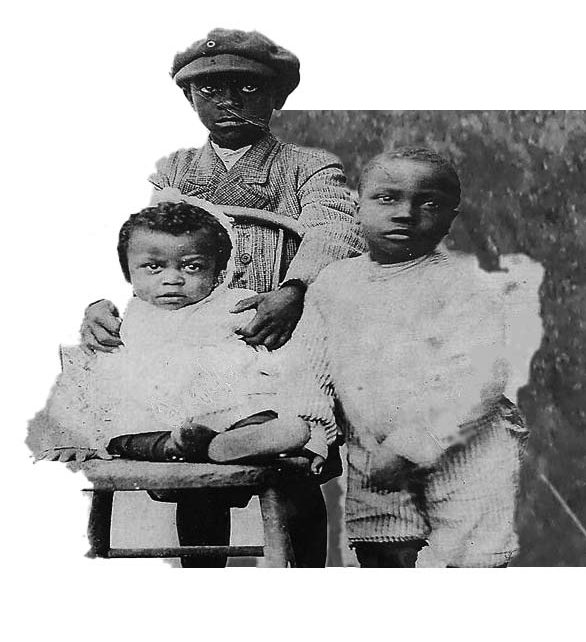
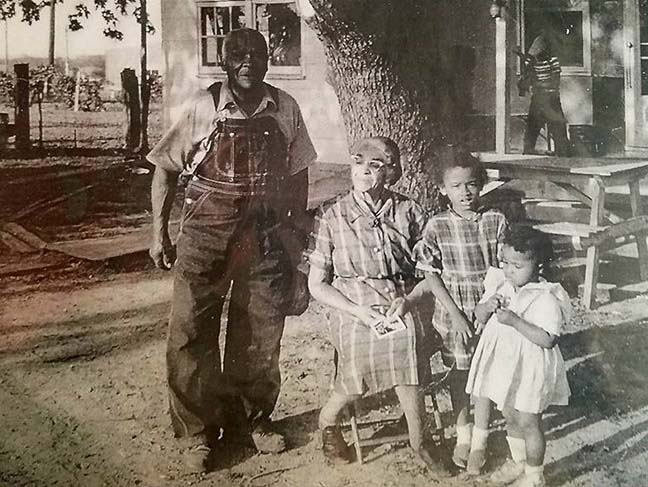
What I saw on the headstones were the names of many of the black folks who lived along Sonderen Street when I was a child. Among them were Simon and Cora White, Elizabeth (everyone knew her as Grandma) Hayden, Slick Thomas and his mother. Edward Dierker who was a Blackfoot Indian … according to his granddaughter, Arlene White.
It’s been quite a task, tracking down the story behind Sage Chapel and the cemetery that took its name. I talked to Mary Stephenson whose family lived in St. Paul and then moved to O’Fallon so the children could go to Franklin High School in St. Charles. Mary went to the little white church that sat next to the creek on Sonderen, the Wish Well [sic] Baptist Church. Most of her family, though, went to the Methodist Church that was next to the black school at the corner of Sonderen and Elm. That’s the church she remembers as Sage Chapel.
I got a slightly different story, though, when I talked to Tommy White, Simon White’s son who, by the way, will turn eighty-nine this Valentine’s Day. Though the Sage Chapel he
Simon and Cora White and their grandchildren
heard tell of was before even his time, it was his understanding that Sage Chapel was originally located midway on Sonderen, approximately where Pitman meets Sonderen.
All of this took place even before Sonderen Street was given its name. The Sonderen family owned a strip of farmland that stretched from Old Highway 40 all the way up to St. Joseph St., north of the railroad tracks. Frank Amptmann’s grandparents, Gerhardt and Elizabeth Sonderen, built the original Wildwood Saloon that is now Ethyl’s. According to Arlene White, the church was named Sage Chapel after the sage fields that grew wild on the middle portion of the Sonderen property. Black folks used to gather in those sage fields to worship and later on, pooled their resources to build the church. Some people understood that the land had long ago been given to the black community for a cemetery; some thought that the black families also pooled their resources to buy the land. Exactly how the land for the cemetery was transferred and where Sage Chapel was may have to remain a mystery.
It should tell us something, I think, that so few records and photographs remain to tell the story of O’Fallon’s black community. Before Sonderen Street got its name, Mary Stephenson
Sage Chapel Cemetery
tells me that this street, where most of the black folks lived, was referred to as simply “The Hill.” Arlene White told me that, in 1922, a deed for one of the properties was filed with an address that had a racial pejorative before the word “Hill.” If we’re all going to be honest enough to admit that that’s what Sonderen Street was sometimes called, let me also say that I never heard any animosity associated with the name, probably because the folks who lived there were all respected and well-liked. You couldn’t have asked for better people than Simon and Cora White who raised eight children and made sure all of them had an education. Never was there a kinder, gentler and more respected man in O’Fallon than Billie Hayden. And let’s not
William Hayden
forget Louie Dierker, who was crippled since childhood. The story, as Arlene relayed it to me, was that he wanted to go along with the men when they rode out to the fields to work. So he jumped on the wagon and as it bounced across the field, he fell off, hit a tree and broke his back. With no medical care, the bones in his back fused as they were broken and for the rest of his life he walked with a cane, his body bent at an almost perfect ninety-degree angle. Despite that, I doubt he ever missed a day of work.
Anyone who in any way attempts to record history must at some point face the dilemma before me as I write. If this is part of O’Fallon’s history, and it is, it needs to be told and not glossed over just to make it more palatable. Yes, there was segregation, particularly where the churches and schools were concerned. Still, as Mary Stephenson said, “Most folks treated you all right—not all.”
So, to the people who now take their rest in Sage Chapel, I’d like to say a few things. To Simon White: I saw you often as I walked to school and thought to myself what a wonderful grandfather you must be. To Elizabeth Hayden: I will never forget your son’s smile and friendly wave as he drove by our house. To “Slick” Thomas: Mary Stephenson told me you were an incredible artist. I’m sorry I never knew that.”
There will be a program at the O’Fallon Historical Society with more history of Sage Chapel by Dorris Keeven-Franke, on Monday, June 4th at 6:30 p.m. and the public is invited. Please come and bring a friend.
This small African-American cemetery lies on what was once the Keithly family farm, and today is just west of the Veterans of Foreign Wars Post 5077 on Veterans Memorial Parkway. It has been used by O’Fallon Missouri’s African-American community as a burial ground since 1881, the year it was conveyed to the Trustees of a former African Methodist Episcopal Church, for a cemetery. During the 19th Century, O’Fallon was home to three African-American churches, the Cravens Methodist Episcopal (later Williams Memorial) Wishwell Baptist (a plant of Hopewell Baptist in Wentzville) and Sage Chapel A.M.E.. all were on Sonderen Street. (A list of those buried here is below.)
Burials haven’t been limited simply to members of these churches either, but through the years, as these churches closed, continued to be a burial ground for the African-
American Community. And, while these churches no longer exist, and likewise there are no records extant, we do know today there are 30 headstones, and some handmade markers, and that there are at least 111 documented burials on this property. At least twenty of these people were born as slaves prior to Missouri’s emancipation of of slaves on January 11, 1865. There are also veterans of the U.S. Colored Troops in the Civil War, and veterans of World War I and the Korean War.
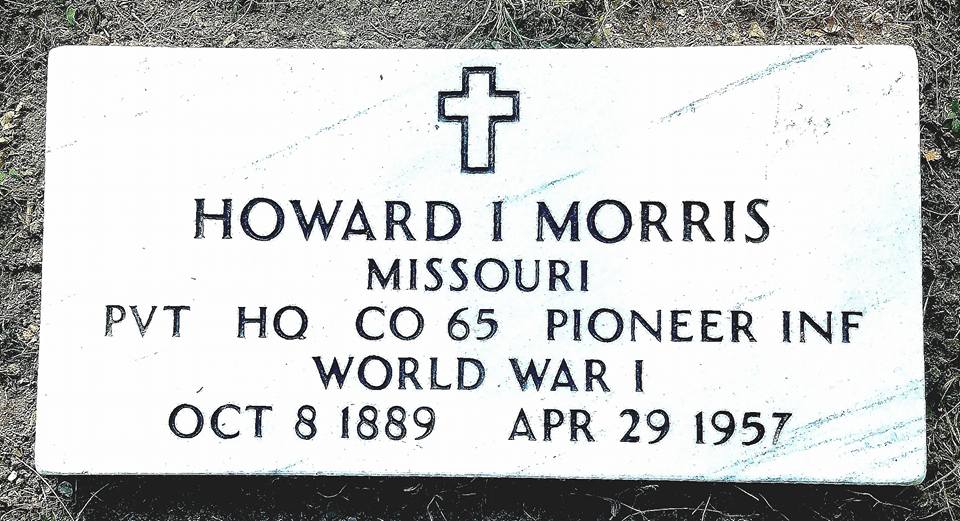
When O’Fallon resident and Historic Preservation Commissioner Jim Frain first visited the Sage Chapel Cemetery in June 2013, he noticed that the headstone for Howard Morris, a World War I veteran, was broken and in danger of being lost. Frain approached his friend, Sheldon Hartsfield, also a veteran and Chairman of the O’Fallon Veterans Commission at that time, and they and the Amvets and a few other members of the community came together and saw the headstone with all of the proper ceremony due this veteran, saw that the stone was replaced.
Since then, area historians have researched the cemetery’s history, nominated it for listing on the National Register of Historic Places, and all while the City of O’Fallon maintains the cemetery. They have not only cut the grass, but when large trees were toppled, and fences were broken, they addressed the situation and the African-American community took notice. Everyone appreciates this. Sage Chapel Cemetery is significant to more than the African-American community of O’Fallon though.
This is only a portion of O’Fallon’s rich heritage, yet, it is a very necessary and important part. It provides dialogue and discussion and an opportunity to reach out and seek greater understanding of our larger community. It is significant with an educational role, as the stories of over one-hundred of our African-American residents are shared, it teaches a history that isn’t taught in our schools today. Sage Chapel Cemetery is already significant as a burying ground where people’s lives should never be forgotten. But even more important is the role this history has played in our community’s history which needs to be acknowledged and voices heard. If you have a family member buried in Sage Chapel Cemetery, we would like to hear from you. Please contact us using the form below.
Phyllis Hayden (left) and George Abington discovered their family connection in July 2017.
Today, along Veterans Memorial Highway, tucked in next to the Veteran’s of Foreign Wars Post 5077, sits the special place we all know and love, Sage Chapel Cemetery. This African-American Cemetery holds at least 111 burials that are researched, documented and identified by either a tombstone, a family marker, or research by local historians. But they only tell part of the story. Each person is like a puzzle piece in the history of the O’Fallon community. And as awareness of this special place has grown, so has the love.
There are 111 documented burials in Sage Chapel Cemetery, but only 30 headstones still remain. There are more documented by family members that are buried there.The oldest stone in the cemetery is Priscilla Ball, born an enslaved person, and buried there in 1900. There are 17 others documented that were also born as enslaved people. We know there are earlier burials, as the deed tells us that the African-American Church trustees purchased it from the Castlio/Keithley family in 1881. The Keithley family had many slaves, probably buried there as well. But research of these burials is difficult, and extremely hard to document. Sometimes we have to rely on more than headstones, death certificates, and obituaries. Sometimes we have to go to the people themselves.
Many of these families, the Hayden, the Thomas and the Whites have shared their stories with us, but we know that there is more work to be done. A Nomination of Sage Chapel Cemetery to the National Register of Historic Places, which is over 60 pages of documentation only shares a bit of the history! The O’Fallon Historical Society has shared its many photographs in its wonderful collection. The City of O’Fallon’s Historic Preservation Commission is working hard to see that the cemetery is preserved for future generations.
Sage Chapel Cemetery needs you. The City of O’Fallon currently maintains the cemetery by seeing that the grass is kept cut, and the toppled trees are removed. The VFW has placed new headstones in honor of the Veterans buried there. Historians like Justin Watkins have worked hours to see that the Nomination to the National Register is successful. Now we must look to the future for Sage Chapel. Hopes are for more to be done that can preserve its stories.
This means everyone can now get involved and help #Preserve Sage Chapel. If it means supporting the City of O’Fallon and the O’Fallon Preservation Commission you can get involved! But it also means that those whose families lie at Sage Chapel can help too now. Please, if you know you have an ancestor at Sage Chapel Cemetery, you can help the story to grow now! We need you! We want to see markers for everyone that is buried there as so many rely simply on the memories and the markers placed there by families. Then we want to see a sign at Sage Chapel that shares its story and identifies everyone for eternity. While nothing should ever disturb its peaceful tranquility, the stories of its people still need to be told. Please help.
If you have family, information, photos or love for Sage Chapel, please share it with us!
Sage Chapel Cemetery is a very special place. More than just a cemetery, it is a place of peace and solace, and the final resting place for the African-American community of O’Fallon, Missouri. For so many it is the only place that they can speak of as “home” and “family” and “my ancestors”. Many of these family members lie in an unmarked grave, where the location is one only known to “Aunt Phyllis” or “Cousin Mary”. And to walk this ground and hear “this is my mother’s grave” and this is where my father is, and to see only the flowers on one, is so sad. To know that with this person, the memory of where his father is, goes with him, is hard to understand in today’s world. But of the one-hundred eleven known burials in Sage Chapel Cemetery, of which at least seventeen were born as slaves, there are only thirty-five graves marked. And some of those are only marked by flowers and a memory.
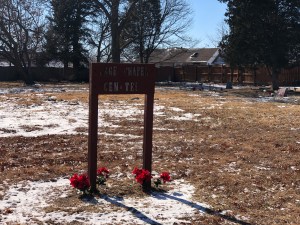
Back a few years ago though, that began to change. A small group of O’Fallon residents took notice of this place, where the grass was high, and some people did not even realize there was a cemetery. At first the group was small, but they worked to make a change. They involved the community whose ancestors were buried there.The City began to cut the grass and it looked better. Someone bought hundreds of flowers at Dollar General and asked their friends for help in spreading them across the cemetery. Another did research and dug into the family histories of those that were buried there. They talked to their friends at the V.F.W. Post 5077, the neighbors to the east. Word spread and the city featured the story on the local TV channel. An Eagle Scout project brought a bright new sign trying to ensure that everyone in O’Fallon recognized that this was Sage Chapel Cemetery and this is a very special place.
In the past year, there were many more great things that happened at Sage Chapel Cemetery. There was a wonderful new stone placed on a World War I veteran, obtained by Post 5077 to replace the former headstone which was cracked and broken. When trees were blown down, the City was quick to take care and mend fences. Volunteers donated fertilizer and grass seed, and worked to spread that love. Other volunteers helped clean and clear brush. Another spent time searching with a metal detector hoping to find remnants of the old metal funeral home signs. Other volunteers catalogued and photographed, did research in deeds, newspapers and death certificate files. Others surveyed the cemetery carefully recording the names. Volunteers came together to carefully prod in search of any headstones that may have fallen over the years, hoping to find more markers. Flowers were planted at grave sites and under the sign. And there was even more love given to this very special place. And a community began to come together, with a common bond.
Because our color does not matter when we are united under the common bond of our love for family. Our love for our ancestors crosses that boundary, and is shared, whether we are black or white. Love for our family – and a connection to our ancestors – transcends all of that. We can each understand each others need to have a place such as Sage Chapel Cemetery. A place filled with the love even though it may not look like a cemetery, because that is what makes it such a special place. A place where one can say “that’s my family” and share that love with their family and friends.
To the many friends – both old and new – of Sage Chapel Cemetery there is a very big Thank You for everything everyone has done this past year. You know who you are. Everyone is so grateful, and appreciates the community involvement. We are looking forward to 2018 and a wonderful new Chapter, and invite you to visit for yourself, this very special place. We are ending 2017 grateful for the many blessings that Sage has had this year, and looking forward to the beginning of a wonderful 2018.
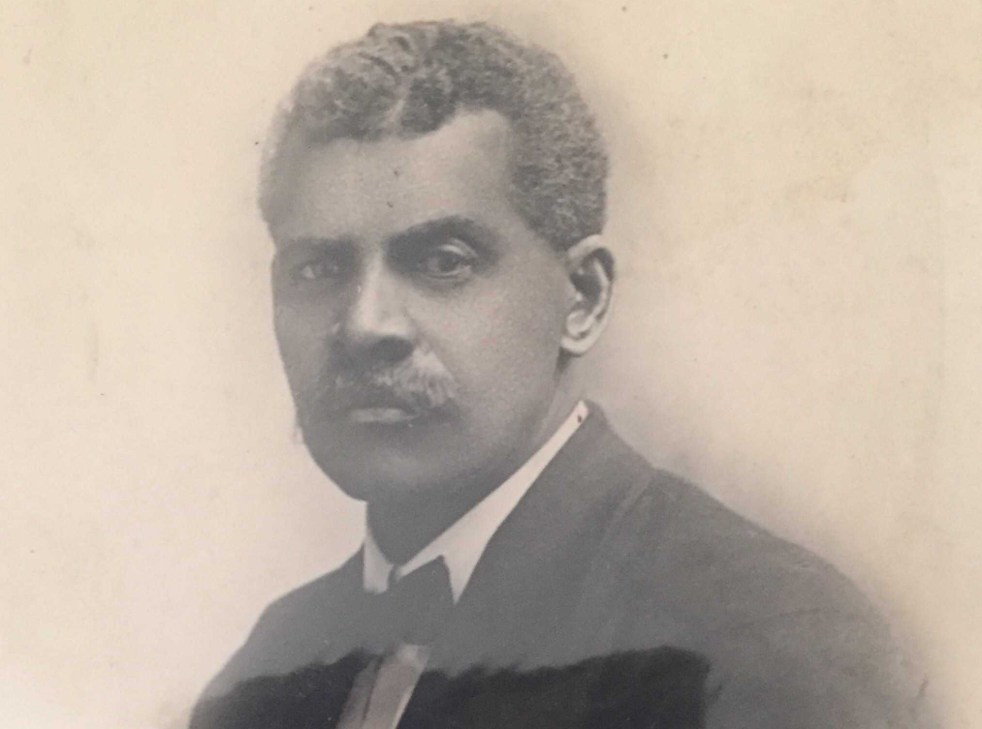
In 1881, one acre of ground was deeded to the Trustees of the African Methodist Episcopal Church we call today Sage Chapel Cemetery. The land was part of the former Keithly family plantation and had most likely been used by their former slaves as well. These Trustees also purchased a 1/2 acre lot on Sonderen Street with a small building that they used for meetings. At this time, a local preacher with the African Methodist Episcopal Church named Jefferson Franklin Sage, was ministering from St. Charles to Jonesburg.He was well loved and continued to minister there at Sage Chapel. Funerals would take place in the little white church (not to be confused with Wishwell Baptist Church which was also on Sonderen next to it, and the Cravens Methodist Church further along) and then be carried “up the hill” to the cemetery. Eventually the cemetery became home to African American families from all of the surrounding community and not just those that were members of Sage Chapel A.M.E.. Most of the 130 known burials in Sage Chapel Cemetery were born as enslaved people. In 2017 we can identify and locate only 40 of these graves. The cemetery had fallen on hard times and become overgrown. Stones had toppled and many were lost in the overgrowth. Families can recall the entire cemetery as full, with many marked simply by a small metal funeral home marker. These are easily removed and lost as well. Many of the families simply marked a loved one’s grave by a field stone, with initials chiseled onto the surface. Many never had a stone. This was, and still is, an integral part of the entire O’Fallon community. No one can identify who owns Sage Chapel Cemetery today. It belongs to all of us. It is part of our community’s history, and there to remind us of our roots. Whether we were black or white, it is there to remind us to be kind, and to care for each other. We can be thankful to the City of O’Fallon for its care, and the many friends who come together. Those that are buried there are “Never to be forgotten”.
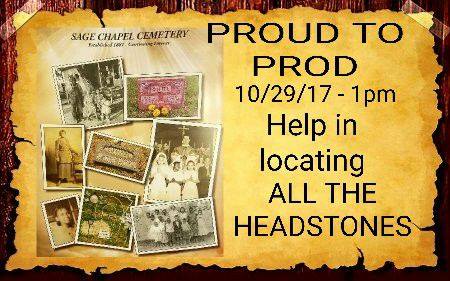
History. Its who we are. Everyone has history. It doesn’t matter if you are black or white, young or old, German or Irish, dead or alive. Its more than the story of a place or a time, because it’s the story of people. Their lives. And all lives matter. It can be found in a child’s face when he spins hemp into rope like his ancestors did. It can be seen in a man’s joy when he visits a blacksmith and relives the craftsmanship of the past. It can be felt when the stories of our ancestors are told so that we may hear their voices. Everyone has history. When we connect with that history, we know who we are. Where we come from tells us where we are going. If we rush too much in our daily lives, we must find time, to slow down and reconnect with our history. Its who we are.Please join us Sunday October 29th as we prod the earth and work to uncover more of the history of Sage Chapel Cemetery. There are many voices there that still need to be heard. The story is just beginning…. Please help us as we gather together, and prod the ground, in search of any gravestones that may have fallen or broken. This is one acre of ground, rich in the history of many of the black families in St. Charles County, not just this A.M.E. Church.
Join us at 1pm at the Cemetery in O’Fallon on Veterans Memorial Parkway next to the VFW across from Ethyls. If you have any type of sharp instrument that can be used to prod the ground as much as 6 inches, please bring it. We are working to have more cemetery prods available. We need at least 20 people to walk shoulder to shoulder so that we cover it thoroughly and do not miss any stones. We know that many of those buried here never had a headstone. Even if you do not feel able to prod please join us for a day to rejoice in the spirit and history of Sage Chapel Cemetery.



 anything about the Sage Chapel Cemetery. I didn’t know anything about it, except that it was situated next to the VFW Hall on Veteran’s Memorial Parkway. To be perfectly honest, I’d never even noticed the sign “Sage Chapel Cemetery” and had never heard of the Sage Chapel. Since I’m one of those strange people who like to walk through cemeteries in historic cities, Lewis and I decided to take a look for ourselves.
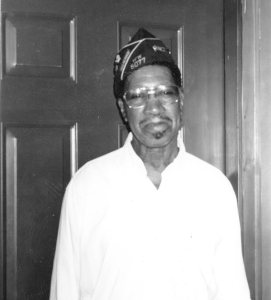

 Morris, a World War I veteran, was broken and in danger of being lost. Frain approached his friend, Sheldon Hartsfield, also a veteran and Chairman of the O’Fallon Veterans Commission at that time, and they and the Amvets and a few other members of the community came together and saw the headstone with all of the proper ceremony due this veteran, saw that the stone was replaced.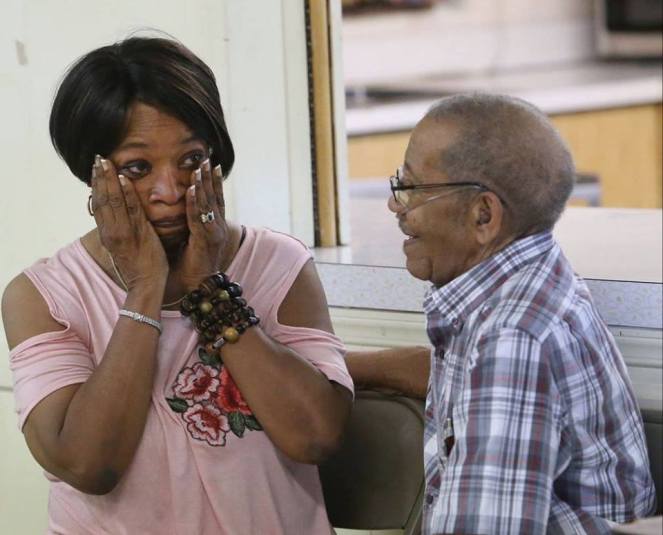


 remain. There are more documented by family members that are buried there.The oldest stone in the cemetery is Priscilla Ball, born an enslaved person, and buried there in 1900. There are 17 others documented that were also born as enslaved people. We know there are earlier burials, as the deed tells us that the African-American Church trustees purchased it from the Castlio/Keithley family in 1881. The Keithley family had many slaves, probably buried there as well. But research of these burials is difficult, and extremely hard to document. Sometimes we have to rely on more than headstones, death certificates, and obituaries. Sometimes we have to go to the people themselves.
 documentation only shares a bit of the history! The O’Fallon Historical Society has shared its many photographs in its wonderful collection. The City of O’Fallon’s Historic Preservation Commission is working hard to see that the cemetery is preserved for future generations.
 involved! But it also means that those whose families lie at Sage Chapel can help too now. Please, if you know you have an ancestor at Sage Chapel Cemetery, you can help the story to grow now! We need you! We want to see markers for everyone that is buried there as so many rely simply on the memories and the markers placed there by families. Then we want to see a sign at Sage Chapel that shares its story and identifies everyone for eternity. While nothing should ever disturb its peaceful tranquility, the stories of its people still need to be told. Please help.


 Sage Chapel Cemetery